
Yeha: Monument, Writing, and a Connected Red Sea World
Yeha is one of the most important archaeological sites for understanding the first millennium BCE in the northern Horn because monumental architecture, inscriptions, religious activity, and regional settlement evidence converge in the same historical landscape.
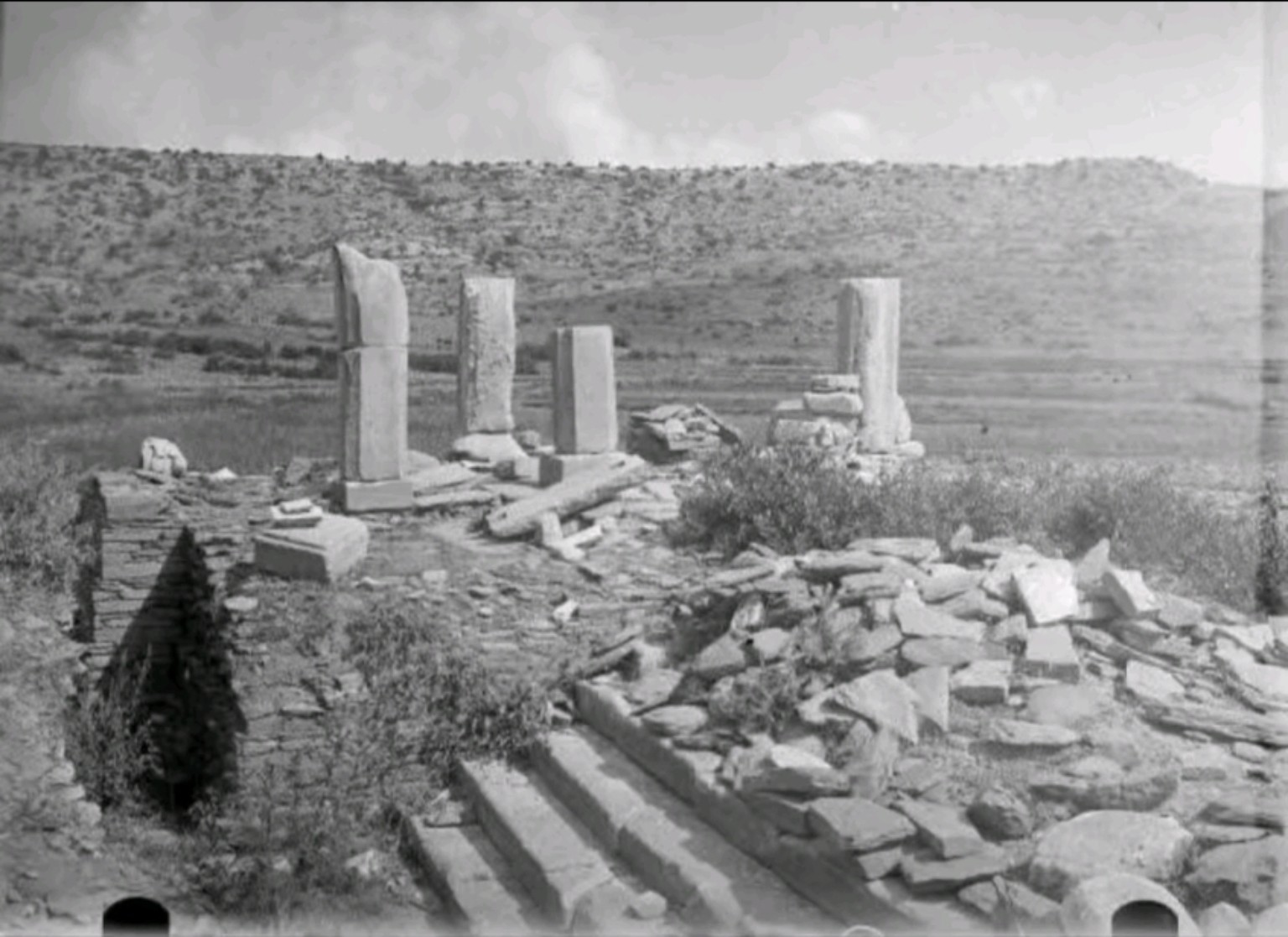
Contextual project archive image. It is not presented as a photograph of the Great Temple at Yeha unless independent provenance establishes that identification.
The Great Temple
Archaeological and heritage research places the monumental temple at Yeha in the early first millennium BCE, commonly around the seventh century BCE.
Its masonry, inscriptions, and architectural relationships form part of a larger body of evidence connecting Yeha with Sabaean traditions across the Red Sea.
The monument is therefore important evidence for a connected cultural world in which architectural and religious traditions circulated across regions.
Architecture does not answer every historical question
Buildings can preserve evidence for construction methods, technological traditions, labor organization, ritual space, institutional investment, and cultural contact.
Architectural resemblance alone does not establish the ethnic identity of every builder or worshipper.
Nor does it prove one specific migration route or political arrangement.
Writing changes the problem
Inscriptions provide evidence that architecture alone cannot.
Ancient writing can preserve names, titles, dedications, divine references, linguistic forms, and other historical information.
At Yeha and related northern-Horn sites, Sabaean language and script belong to the archaeological record.
This provides direct evidence of literate relationships across the Red Sea, not merely visual resemblance between monuments.
+
inscriptions
+
archaeological context
+
chronology
= stronger historical reconstruction
Preserve the inscription as evidence
Epigraphic claims should remain tied to authentic inscription images, published readings, or otherwise verifiable source material.
Yeha and the wider settlement landscape
Yeha should not be understood as a single monumental building isolated from its surrounding landscape.
Regional archaeological research documents a broader settlement history extending beyond the temple complex.
Beta Samati, located northeast of Yeha, is particularly important because excavations documented occupation extending from the Pre-Aksumite period into Aksumite centuries.
Why Beta Samati matters
Long-term occupation complicates older historical models that placed a sharp, complete rupture between Pre-Aksumite and Aksumite societies.
Archaeological evidence instead permits investigation of persistence, transformation, reuse, demographic change, and institutional development across a long chronological span.
What Yeha securely establishes
Yeha securely demonstrates monumental architecture, religious activity, writing, and substantial connections with Sabaean traditions.
It also belongs to a wider northern-Horn settlement landscape rather than existing as an isolated monument.
monumental architecture
inscriptions
religious and sanctuary contexts
regional settlement archaeology
material evidence for Red Sea connections
What Yeha does not establish by itself
Yeha does not independently determine the complete territorial boundaries of DʿMT.
It does not establish that all Sabaean-linked forms resulted from one migration event or one political mechanism.
It does not establish that political authority always moved in one direction across the Red Sea.
Nor does one site's evidence define the identity of every population in the wider region.
A connected Red Sea world
The strongest interpretation is not one of complete isolation.
The archaeological and inscriptional record demonstrates substantial interaction between the northern Horn and ancient Saba.
The more difficult task is reconstructing how that interaction functioned over time.
Why Yeha matters for DʿMT
Yeha provides one of the strongest archaeological settings for studying the political and religious world associated with DʿMT.
Monumental building, writing, religious activity, and settlement evidence occur within the same broad historical landscape.
This convergence makes Yeha central to the study of DʿMT while also making source discipline essential.
Evidence before reconstruction
Evidence: monumental architecture, inscriptions, archaeological contexts, settlement history, material culture, and securely dated remains.
Interpretation: cultural connections, institutional functions, political relationships, chronology, and mechanisms of interaction.
Reconstruction: complete migration narratives, territorial systems, population identities, political hierarchies, and wider models not directly stated by the surviving ancient record.
Yeha can document a great deal. It should not be made to answer questions for which the evidence remains incomplete.