
Visual Epigraphy: Reading Ancient Inscriptions from Images
Ancient inscriptions should be studied from source images whenever possible. Digital presentation can improve visibility, but it must never replace damaged or missing ancient writing with invented text.
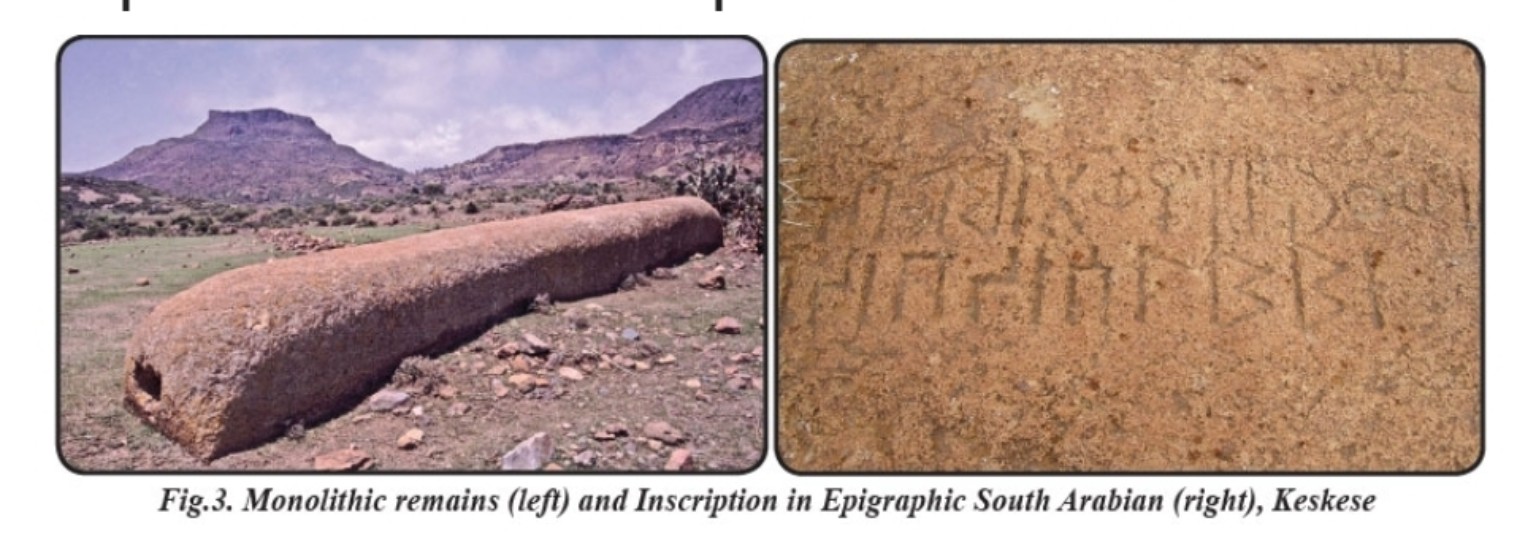
Project archive inscription photograph used as a visual-epigraphy example. It is not presented as an Almaqah dedication or assigned to a specific inscription corpus here unless independent provenance establishes that identification.
The source image comes first
A useful inscription photograph is not merely decoration. It is part of the evidentiary record.
Readers should be able to compare a proposed transcription or transliteration with the marks preserved on the stone, altar, stela, architectural block, or portable object.
THE SABAEAN UNIVERSE therefore treats the source photograph as the first visual layer in the epigraphic workflow.
authentic user-supplied or securely documented inscription
↓
verified published inscription
↓
no inscription image
Generated pseudo-script is not a substitute for ancient evidence.
Preserve the archival master
Whenever possible, the highest-quality unaltered version of an inscription photograph should be retained as the archival master.
Edited derivatives may then be created for web publication, diagrams, teaching material, books, or social media.
This preserves a traceable distinction between original documentation and later presentation work.
What image editing can do
Responsible image processing can make surviving details easier to inspect.
Useful adjustments can include cropping, rotation, perspective correction, exposure adjustment, tonal correction, contrast enhancement, and restrained sharpening.
These procedures should reveal information already captured by the photograph rather than manufacture information that was never recorded.
What image editing must not do
Editing must not silently create ancient letters that are absent from the source image.
It must not convert uncertain traces into complete characters merely because one reading produces an expected word.
It must not replace damaged sections with aesthetically convincing pseudo-Musnad or other invented writing.
≠
inventing a missing stroke
clarifying contrast
≠
reconstructing a letter
presentation
≠
evidence creation
Damage is evidence too
Cracks, erosion, missing corners, worn surfaces, recutting, ancient breaks, weathering, and later damage are not merely visual defects.
They can explain why a reading is uncertain and may preserve information about the history of the object itself.
If an area of an inscription cannot be read, the source photograph should remain unreadable there. Any proposed reconstruction belongs in a separate, explicitly marked layer.
Do not redraw uncertainty into certainty
Ancient letter forms vary according to period, region, material, carving technique, available space, and individual hand.
A damaged mark may plausibly represent more than one sign.
A responsible edition records that uncertainty rather than altering the image until it resembles the preferred reading.
Photograph and transcription are different layers
The photograph records the visible object.
A transcription records a researcher's reading of the visible signs.
The two layers are connected, but they are not identical.
source photograph
↓
visible-character assessment
↓
diplomatic transcription
↓
marked restoration
↓
transliteration
↓
normalization where needed
↓
translation
↓
historical interpretation
Diplomatic transcription
A diplomatic transcription aims to represent the preserved writing as faithfully as practical.
Missing areas, uncertain signs, damaged passages, line divisions, word separators, and unusual spellings should remain visible in the scholarly presentation.
Normalization belongs to a later analytical layer.
Restoration must remain visible
Restoring missing text is a legitimate part of epigraphy when supported by surviving traces, grammatical structure, available space, formulaic parallels, or related inscriptions.
A strong restoration can still be a reconstruction.
Readers should never have to guess which characters physically survive and which have been supplied by an editor.
Transliteration is not the ancient object
Transliteration represents ancient signs using a modern scholarly notation.
It enables linguistic analysis, searching, indexing, comparison, and publication, but remains a representation of the ancient writing rather than the inscription itself.
A declared transliteration standard should therefore be applied consistently.
Normalization is a separate operation
Linguistic normalization can be useful for grammar, indexing, dictionary comparison, or reconstruction of a conventional form.
It should never silently replace the spelling preserved by the ancient inscription.
≠
transliteration
≠
normalized linguistic form
≠
translation
Translation adds interpretation
Translation requires decisions about grammar, vocabulary, royal titles, divine terminology, damaged phrases, and historical context.
Where more than one translation is defensible, the alternatives should be stated rather than hidden behind one apparently certain English rendering.
Translation should remain visually separate from the source image so that modern wording is never mistaken for writing physically present on the ancient artifact.
Provenance changes evidentiary value
A clear photograph without provenance may still preserve useful letter forms.
Its historical usefulness becomes much greater when the image can be tied to a documented object, findspot, museum inventory, excavation record, material description, chronology, and publication.
Visual epigraphy therefore requires both image quality and source history.
Minimum inscription record
Record ID
Source image
Site / findspot
Present location
Museum or inventory number
Material
Dimensions
Script
Language
Dating
Dating basis
Diplomatic transcription
Restoration notes
Transliteration
Normalized form, if used
Translation
Bibliography
Provenance notes
Confidence notes
Related ruler
Related deity
Related sanctuary or monument
Why generated pseudo-script is dangerous
Computer-generated ancient-looking writing can appear convincing while containing malformed signs, mixed alphabets, impossible combinations, or completely invented characters.
A reader unfamiliar with the script may not recognize the difference.
Once such an image circulates beside historical content, it can be copied elsewhere and gradually misidentified as genuine evidence.
Illustration is different from evidence
A modern reconstruction or artistic diagram may still be useful when its purpose is clearly stated.
The problem is not reconstruction itself. The problem is allowing modern reconstruction to acquire the visual authority of a primary source.
If characters are restored → mark the restoration.
If an image is reconstructed → label it reconstruction.
If no authentic inscription is available → do not manufacture one.
Verified Musnad presentation
When verified Sabaean Musnad text is available from an ancient inscription or reliable publication, it can be shown alongside transliteration and translation.
The ancient character sequence should be preserved as closely as the source and Unicode representation permit.
Where a character cannot be verified confidently, uncertainty is preferable to silently inserting an assumed sign.
Multiple photographs can improve a reading
Different photographs of the same inscription may reveal details that are difficult to see in one image.
Side lighting, viewing angle, resolution, surface moisture, shadows, and weathering can change the apparent form of shallow carved lines.
Comparing independent photographs can therefore improve epigraphic analysis without modifying the object.
Photogrammetry and 3D documentation
Where available, photogrammetry and three-dimensional surface models can be useful for shallow, weathered, or damaged inscriptions.
They can preserve surface geometry and permit inspection under different virtual lighting directions.
Digital models remain documentation tools. The interpretation of a carved feature remains distinct from the geometry recorded by the model.
Visual evidence and Almaqah research
For Almaqah-related material, inscription photographs matter because claims may involve divine names, rulers, titles, dedicatory formulas, sanctuaries, and religious terminology.
A decorative modern rendering of the divine name cannot carry the same evidentiary weight as a documented ancient inscription.
The source object remains primary.
Visual evidence and HCM-364
HCM-364 may compare inscriptional evidence with a wider reconstructed framework.
The matrix must never alter inscription photographs or editorial readings so ancient evidence appears to contain the expected HCM structure.
If an inscription supports a comparison, that support must arise from the authentic source and its historical context.
Evidence: source image, visible marks, object surface, material, dimensions, provenance, archaeological context, and documented publication history.
Interpretation: character identification, transliteration, translation, dating, linguistic analysis, and historical interpretation.
Reconstruction: restored passages, missing signs, reconstructed layouts, proposed symbolic meanings, or wider historical and HCM-364 models not physically preserved on the ancient object.
A future inscription database
The long-term research value of the archive will increase when each inscription image is connected to structured metadata instead of remaining an isolated media file.
A searchable database could connect rulers, divine names, places, sanctuaries, monuments, scripts, languages, dates, bibliography, related artifacts, and confidence levels.
Such a system would allow visual comparison while preserving the distinction between source, reading, interpretation, and reconstruction.
The principle is simple
Ancient inscriptions already contain uncertainty because of erosion, breakage, incomplete excavation, damaged surfaces, and difficult language.
Digital publication should reduce that uncertainty where possible, not add another layer of invented material.
Preserve provenance.
Mark uncertainty.
Mark restoration.
Separate transliteration from translation.
Label reconstruction.
When the ancient evidence is missing, leave it missing.