
Venus and the Morning Star: A Powerful Ancient Sky Marker
Venus is normally the brightest planet visible from Earth. Because its orbit lies inside Earth's orbit, it remains relatively close to the Sun in our sky and alternates between conspicuous appearances before sunrise and after sunset.
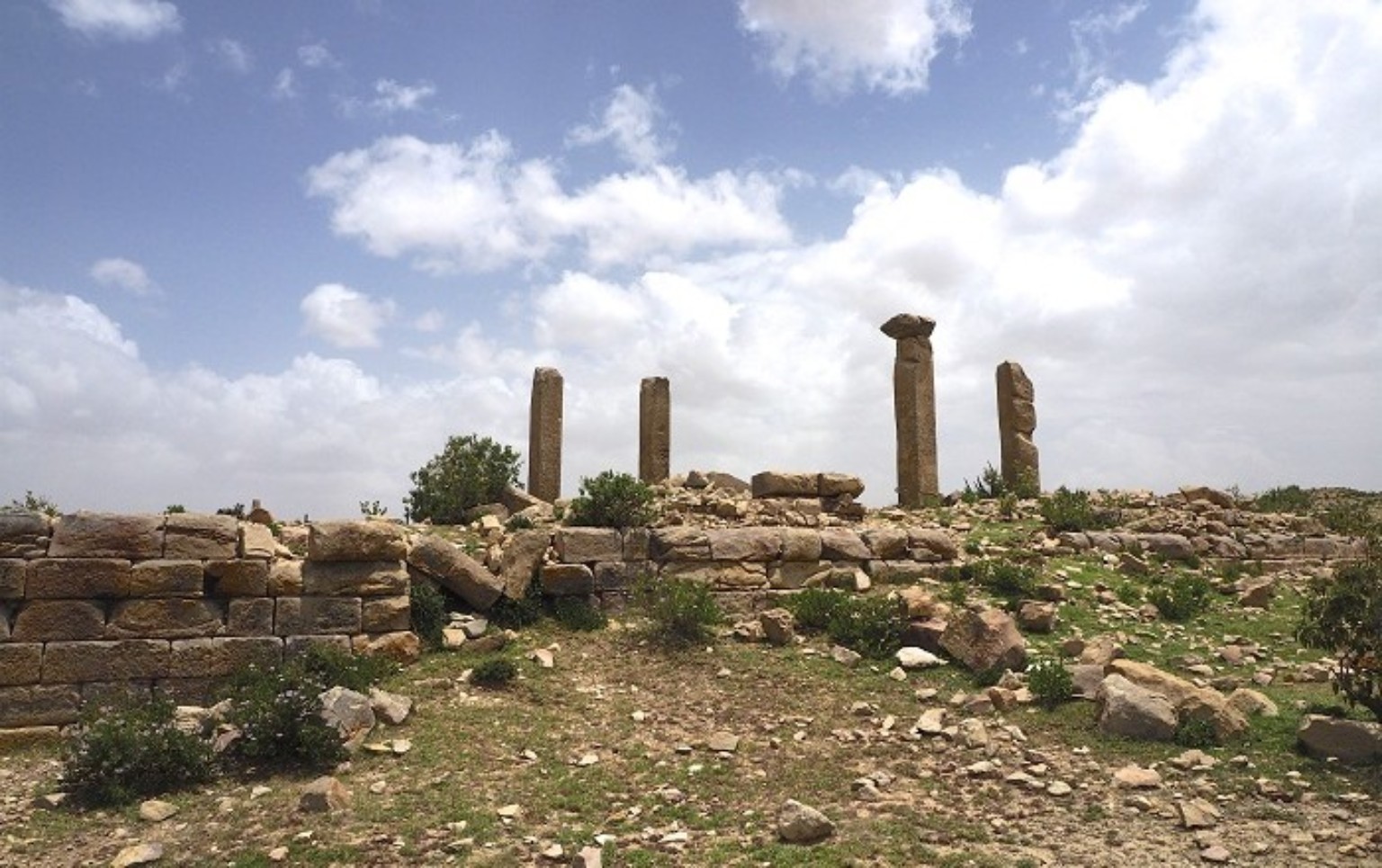
Contextual project image. It illustrates horizon observation and is not presented as evidence for a specific ancient Venus observatory, alignment, sanctuary, or ritual.
Why Venus is so noticeable
Venus can become exceptionally bright because it is relatively close to Earth and its cloud-covered atmosphere reflects a large amount of sunlight.
When prominent in twilight, Venus can appear before most stars become visible in the evening or remain conspicuous while dawn brightens.
Its brightness makes it especially suitable for repeated naked-eye observation.
Venus is an inner planet
Venus orbits the Sun closer than Earth does.
From our viewpoint, this keeps Venus within a limited angular distance of the Sun.
We therefore see Venus primarily in the western sky after sunset or in the eastern sky before sunrise rather than high in the middle of the night.
The Morning Star
During part of its cycle, Venus rises before the Sun and can dominate the pre-dawn sky.
This appearance is conventionally called the Morning Star.
Its closeness to dawn makes it an especially recognizable celestial marker for observers watching the eastern horizon.
The Evening Star
During another part of its cycle, Venus remains visible after sunset.
It then appears as the bright Evening Star.
and
Evening Star
are
two appearances of the same planet
Why that identity matters
Without modern orbital theory, morning Venus and evening Venus appear in very different parts of the daily sky cycle.
Recognizing that both recurring appearances belong to the same celestial body is an important observational insight.
Historical evidence is still required before assigning that insight to a particular ancient culture or period.
Venus stays relatively close to the Sun
The angular separation between Venus and the Sun as viewed from Earth is called elongation.
Venus reaches a maximum apparent separation and then moves back toward the Sun in the sky.
This creates recurring seasons of strong morning or evening visibility.
Greatest elongation
Near greatest elongation, Venus is comparatively well separated from the Sun and can remain visible for a substantial period before sunrise or after sunset.
Actual visibility depends on latitude, season, the angle of the ecliptic, local horizon obstruction, weather, and atmospheric clarity.
Conjunctions
At other stages, Venus appears near the Sun and becomes difficult or impossible to observe under ordinary conditions.
Two major geometrical configurations are inferior conjunction and superior conjunction.
Inferior conjunction
Inferior conjunction occurs when Venus passes between Earth and the Sun in orbital geometry.
Around this period, Venus transitions between evening and morning visibility and is generally lost in the Sun's glare during the closest part of the transition.
Superior conjunction
Superior conjunction occurs when Venus lies on the far side of the Sun from Earth.
Around this period, it transitions between morning and evening visibility.
The Venus synodic cycle
Venus returns to approximately the same Sun-Earth viewing relationship after about 584 days.
This interval is long enough to produce dramatic changes in visibility but short enough for an observer to witness the cycle repeatedly over a lifetime.
Five Venus cycles and about eight Earth years
Five Venus synodic periods come close to eight Earth years.
≈
roughly 8 Earth years
The relationship is close, not exact.
Venus therefore returns to broadly similar positions relative to the Sun after about eight years, while small differences continue to accumulate.
Venus has phases
Like the Moon, Venus shows phases because observers see different fractions of its illuminated hemisphere as its orbital geometry changes.
These phases are readily observed through telescopes but are not normally resolved by the unaided eye.
Ancient naked-eye observers primarily encountered changes in brightness, timing, direction, altitude, and visibility.
Brightness also changes
Venus's apparent brightness varies because its distance from Earth and its illuminated fraction both change during the cycle.
It can therefore become exceptionally bright even when it is not showing a fully illuminated face toward Earth.
Why Venus is useful as a sky marker
repeated morning appearances
repeated evening appearances
periods of disappearance near the Sun
approximately 584-day repetition
recognizable relationship with dawn and dusk
Together, these features make Venus one of the easiest planets for a long-term naked-eye observer to recognize.
Venus can be recorded against the horizon
The same field discipline used for solar horizon observation can be applied to Venus.
local time
observation-point coordinates
azimuth
altitude
horizon landmark
morning or evening appearance
relationship to sunrise or sunset
atmospheric conditions
First and last visibility are not perfectly fixed
The date on which Venus first becomes visible after a period near the Sun depends partly on observational conditions.
Haze, clouds, atmospheric transparency, eyesight, horizon altitude, latitude, and twilight brightness can all affect first and last visibility.
Ancient visibility records therefore should not be interpreted as though every observer at every location would see Venus on precisely the same day.
Astronomy and cultural meaning are different questions
Venus's orbital behavior belongs to astronomy.
The meaning assigned to Venus by a particular society belongs to historical interpretation.
=
astronomical observation
a culture identifies that appearance with a deity, ritual, title, or symbolic function
=
historical claim requiring evidence
Do not universalize Venus symbolism
Venus received important religious and symbolic interpretations in several ancient societies.
Those meanings were not automatically identical across different regions, languages, periods, and religious systems.
Evidence from Mesopotamia, for example, can provide comparative material without automatically establishing the same theology in Sabaean or northern-Horn contexts.
Names must be tied to sources
If an ancient text or inscription explicitly names a celestial object, deity, or Morning Star figure, its wording and provenance should be presented directly.
If an identification depends on modern scholarship, that interpretation should be attributed.
If the identification belongs to HCM-364, it should be identified as the project's reconstructed architecture.
Venus and the Morning Star in HCM-364
Within HCM-364, Venus — ዝህራ (Zǝhra); Morning Star — ኮኾብ ጽባሕ (Koḵob Ṣǝbaḥ) is the canonical G03 Celestial Gate in the WHAT coordinate.
7 Celestial Gates = WHAT
4 Elements = HOW
13 × 7 × 4 = 364
Venus's physical astronomical behavior can be measured independently of that HCM assignment.
This distinction is important: the planet is observable evidence; its position inside HCM-364 is part of the project's defined reconstruction.
Canonical inside HCM does not mean historically proven
The G03 Celestial Gate is fixed within HCM-364's internal architecture.
The separate historical question is whether surviving ancient evidence can independently demonstrate a corresponding seven-Gate system and the same Venus assignment.
What would strengthen a historical Venus case?
explicit terminology referring to Venus or a Morning Star
dated archaeological contexts
repeated symbolic associations
documented ritual or calendrical timing
consistent astronomical observations
linguistic evidence connecting the celestial name with its function
What would be weaker evidence?
A star-like mark on an object is not automatically Venus.
A disc-and-crescent motif does not automatically establish a complete planetary theology.
A monument facing the dawn does not automatically constitute a Venus alignment.
Each proposed identification should be tested against alternative explanations.
Prediction before interpretation
HCM-364 becomes more testable when the model makes defined predictions before new astronomical observations are interpreted.
A proposed Venus relationship could predict a particular seasonal visibility window, recurrence interval, or horizon relationship.
↓
calculate astronomical expectation
↓
conduct observation
↓
compare predicted and observed result
↓
revise the model if necessary
The strongest current conclusion
Venus is one of the most conspicuous repeating objects in the naked-eye sky.
Its alternating morning and evening appearances, disappearance near the Sun, strong brightness, and approximately 584-day synodic cycle are astronomical facts that can be independently observed and calculated.
Culture-specific religious or symbolic meanings require their own ancient evidence.
G03 — Venus / Morning Star — is canonical within the seven Celestial Gates of HCM-364, while the historical antiquity of the complete HCM Gate structure remains a research question to be tested independently.
Venus's orbit, morning and evening appearances, conjunctions, brightness, and synodic cycle are observable and calculable.
[B] Defensible comparative
ancient meanings assigned to Venus can be compared only where textual, archaeological, linguistic, or iconographic evidence is available.
[C] HCM reconstruction
G03 — Venus / Morning Star — is one of HCM-364's canonical seven Celestial Gates. That internal HCM assignment should remain separate from claims of direct ancient historical attestation.