
Royal Dedications: What Ancient Inscriptions Actually Tell Us
Royal votive inscriptions are powerful primary sources. They can preserve rulers, titles, divine names, places, objects, and actions, but they are also deliberate acts of political and religious communication.
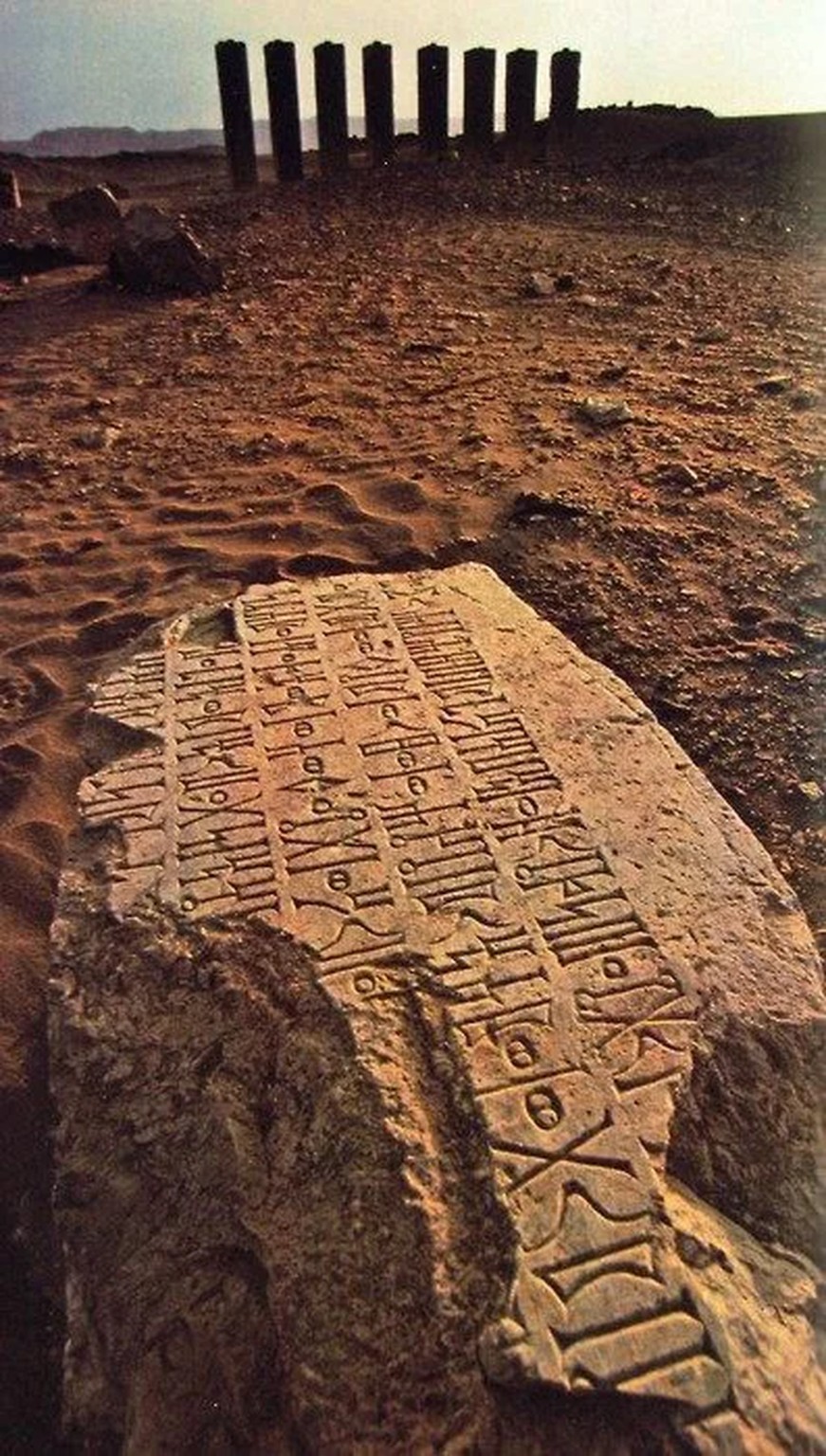
Project archive image. It illustrates the epigraphic workflow and is not presented as the specific royal dedication discussed in every example on this page.
Start with what is actually written
The strongest information in a royal dedication is normally the information that can be established directly from the surviving inscription.
Depending on preservation, a text may identify a ruler, preserve a title, name a deity, mention a place, describe construction or restoration, record a dedication, or identify an object presented to a sanctuary.
Those statements form the documentary core. Wider historical reconstruction should begin only after that source layer has been established.
Names and titles
A securely read royal name establishes that the inscription associates that ruler with the text and with the act or object described by it.
Titles can preserve important political vocabulary. They should not automatically be translated into modern categories such as emperor, governor, tribal chief, or provincial ruler unless linguistic and historical evidence supports that equivalence.
Divine names
When a dedication names Almaqah or another deity, the divine name itself is evidence.
It may establish that the deity was invoked, honored, thanked, or associated with the documented object or sanctuary, depending on the surviving wording.
It does not automatically establish a complete theology. Celestial identity, mythology, ritual function, and symbolic associations may require additional inscriptions, archaeological contexts, or comparative evidence.
Verbs matter
Verbs can be among the most historically important parts of a dedication. They may indicate that a ruler built, dedicated, restored, presented, caused something to be constructed, thanked a deity, or performed another recorded action.
Grammar therefore matters. “Built,” “caused to be built,” “restored,” and “dedicated” are not interchangeable historical statements.
↓
different historical action
↓
different reconstruction
The object itself is evidence
An inscription should not be separated from the physical object carrying it.
Material, dimensions, carving technique, damage, orientation, placement, reuse, and archaeological context can all contribute to interpretation.
A dedication carved on an altar belongs to a different material setting from a monumental wall inscription, statue base, portable object, funerary stone, or reused architectural block.
Provenance matters
Archaeological provenance can provide information that the words alone do not preserve.
A documented findspot may contribute evidence for chronology, building phase, sanctuary association, reuse, destruction, nearby objects, or ritual context.
An inscription removed from its original location still preserves textual information, but parts of its historical context may have been permanently lost.
Do not collapse the stages of reading
Epigraphic work becomes difficult to audit when transcription, restoration, transliteration, normalization, translation, and interpretation are blended into one polished sentence.
THE SABAEAN UNIVERSE therefore keeps those stages separate.
source photograph
↓
diplomatic transcription
↓
marked restoration
↓
transliteration
↓
normalization where needed
↓
translation
↓
historical interpretation
1. Source photograph
The photograph is the starting point because readers should be able to compare a proposed reading with the surviving marks on the object.
Cropping, exposure correction, sharpening, and other presentation work may improve visibility, but enhancement must not create missing strokes or letters.
2. Diplomatic transcription
A diplomatic transcription records the surviving signs as faithfully as possible.
Damage, missing areas, uncertain characters, word dividers, and unusual forms should remain visible rather than being silently corrected.
3. Restoration
Ancient inscriptions are often incomplete. Scholars may propose restorations from surviving traces, grammar, formulaic parallels, physical space, or related inscriptions.
A restoration may be persuasive, but restored characters remain editorial reconstruction rather than physically surviving letters.
≠
restored sign
Both can be useful. They must remain visibly distinguishable.
4. Transliteration
Transliteration represents the ancient signs using a declared scholarly notation.
The convention should be stated and applied consistently so readers can distinguish differences in the ancient text from differences created by modern transliteration systems.
5. Normalization
A normalized linguistic form may help with comparison, indexing, grammar, or dictionary work.
Normalization must remain separate from the transcription and transliteration so that the ancient spelling is not silently replaced by a modern preferred form.
6. Translation
Translation is already interpretive. Ancient political and religious vocabulary does not always have a perfect modern equivalent.
Where more than one translation is defensible, alternatives should be stated rather than hiding uncertainty behind one confident English phrase.
7. Historical interpretation
Only after the earlier layers are clear should the inscription be used to construct a larger historical argument.
This is where questions of political authority, cult organization, sanctuary networks, chronology, cultural interaction, and ideology can be examined.
Royal inscriptions are not neutral reports
A royal inscription records what its commissioner chose to state publicly. This makes it exceptionally valuable evidence for royal representation and official claims.
It does not mean that every political or military statement should automatically be treated as independently verified history.
Formulaic language
Dedications frequently use recurring formulas. Formulaic language remains valuable because repeated wording can reveal ritual conventions, institutional vocabulary, grammatical patterns, and relationships among inscriptions.
But a conventional phrase should not automatically be interpreted as a unique description of an extraordinary historical event.
Comparison creates stronger history
One inscription may preserve one ruler or dedication. A larger corpus can reveal recurring titles, divine associations, genealogies, place names, formulae, political relationships, or changes in language through time.
When epigraphy is combined with archaeology, architecture, settlement evidence, securely identified objects, and chronology, historical reconstruction becomes significantly stronger.
+
archaeological context
+
chronology
+
related texts
+
independent material evidence
=
stronger history
Why Meqaber Gaʿewa matters
The royal dedication associated with Meqaber Gaʿewa demonstrates why provenance is so important.
The inscription belongs to an excavated sanctuary environment containing architecture and additional archaeological material.
That context allows researchers to compare the written dedication with the physical religious setting in which it was found.
Evidence before synthesis
Royal dedications can legitimately contribute to large historical narratives, but the analytical steps must remain visible.
The problem begins when a translation, restoration, or modern historical conclusion is rewritten as though it were directly present in the ancient text.
THE SABAEAN UNIVERSE therefore keeps the surviving inscription separate from what modern researchers infer from it.
Royal dedications and HCM-364
HCM-364 may be compared with epigraphic evidence only after the inscription has been read independently.
An expected HCM House, Gate, element, celestial identity, number, or technical term must not be inserted into a broken passage simply because the reconstruction predicts that it should appear.
Evidence: visible inscription, securely readable names and titles, divine references, grammar, physical object, material, provenance, and archaeological context.
Interpretation: translation choices, political relationships, cult organization, chronology, historical significance, and intended public message.
Reconstruction: larger political systems, complete theological models, ethnic narratives, cosmological frameworks, or HCM-364 correspondences not explicitly stated by the inscription.