
The Great Temple at Yeha: Architecture, Cult, and Evidence
The Great Temple at Yeha is one of the strongest archaeological anchors for studying Almaqah in the northern Horn because monumental architecture, inscriptions, cultic context, and regional archaeology converge at one major ancient center.
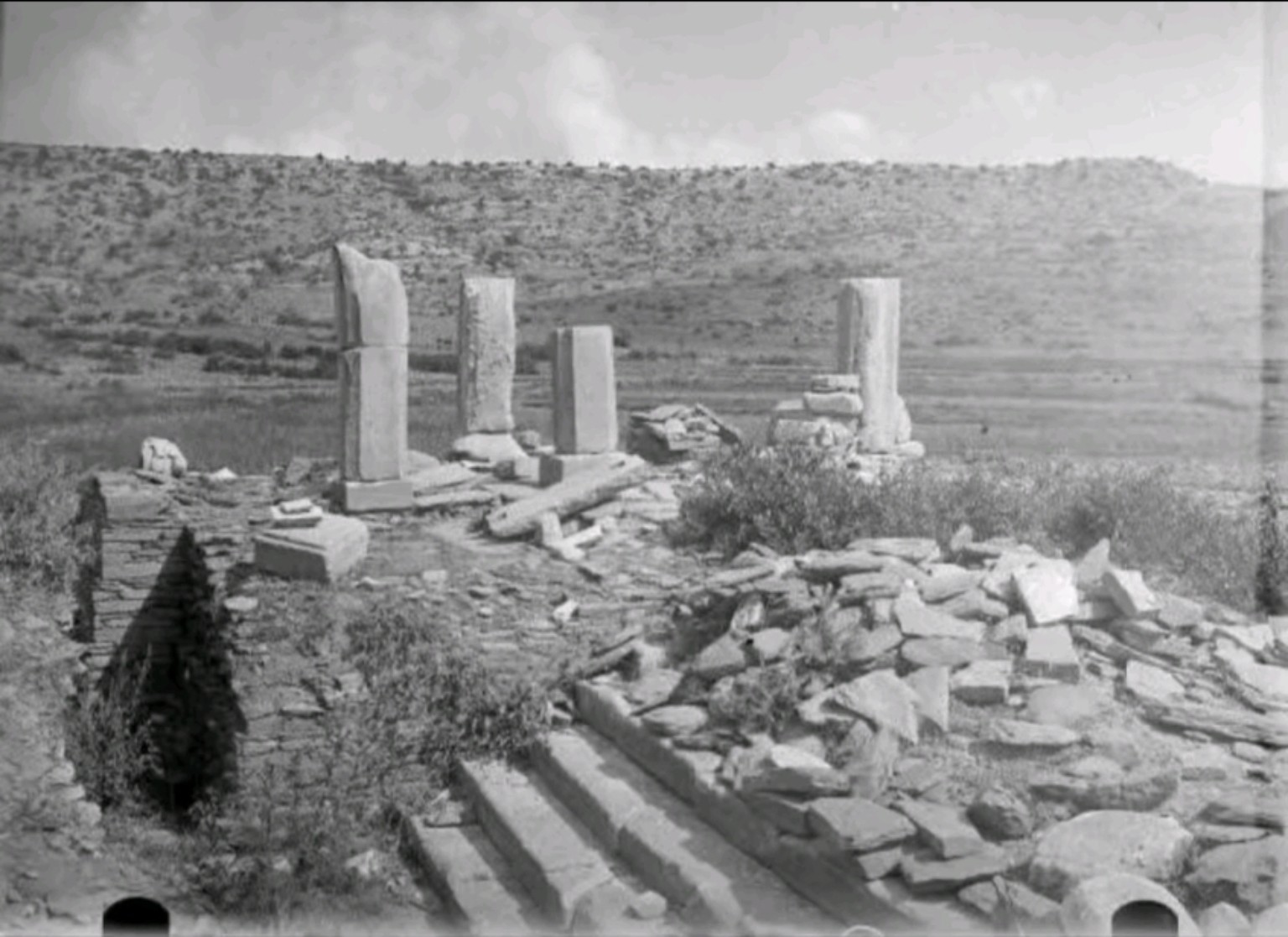
Contextual project image. It is not presented as a photograph of the Great Temple at Yeha unless its provenance independently establishes that identification.
A seventh-century BCE monument
Archaeological research dates the surviving Great Temple at Yeha to around the middle of the seventh century BCE. Its preserved masonry makes it one of the most important first-millennium BCE monumental structures known from the northern Horn.
The building was constructed from carefully dressed stone blocks fitted with considerable precision. Its masonry and architectural planning demonstrate technical knowledge, organized labor, and major investment in a sacred structure.
The temple also preserves clear connections with Sabaean architectural traditions across the Red Sea. Those similarities form part of a broader archaeological pattern that includes writing, religious vocabulary, material culture, and exchange.
Yeha belongs to a larger landscape
The Great Temple should not be studied as an isolated monument. Yeha formed part of a wider settlement and political landscape with long occupation, monumental construction, writing, ritual activity, and connections with other communities of the northern Horn.
Regional archaeology matters because monumental buildings can dominate historical interpretation. Settlement remains, ceramics, burials, inscriptions, environmental evidence, and nearby sites provide information about the broader communities in which such monuments functioned.
Association with Almaqah
Archaeological research and heritage documentation associate the Great Temple at Yeha with Almaqah.
This is historically significant because the divine name belongs within a substantial sanctuary context rather than appearing only as an isolated textual reference.
It does not automatically provide a complete theology of Almaqah or prove every later interpretation of the deity's celestial identity.
Attestation comes before theology
The strongest starting point is the ancient evidence itself: divine names, dedications, inscriptions, architecture, objects, and archaeological contexts.
Once those sources are established, historians can compare patterns across sites and texts. Broader claims about divine attributes, celestial bodies, symbols, or ritual systems belong to an interpretive layer unless the ancient evidence explicitly states them.
Celestial identity requires caution
Modern scholarship has sometimes assigned Almaqah specific celestial identities. Those descriptions should be attributed to the scholars or traditions proposing them unless the ancient source under discussion explicitly establishes the identification.
A divine name, a symbol, a celestial body, and a modern theological label are different categories of evidence.
For THE SABAEAN UNIVERSE, the safer method is therefore to describe what the ancient source preserves first and then label later celestial interpretation separately.
≠
automatically identified celestial body
sanctuary association
≠
complete theology
symbol
≠
complete explanation of the deity
Architecture as evidence
The Great Temple demonstrates that substantial resources were invested in formal sacred architecture. Stone preparation, transport, planning, and construction required skilled labor and coordination.
This allows archaeologists to discuss technical and institutional capacity with reasonable confidence.
Architecture alone cannot identify every group involved in construction, reconstruct the complete political system, or determine the identity of every person who used the sanctuary.
Sabaean connections
Yeha preserves several categories of evidence showing strong connections with the Sabaean cultural world across the Red Sea.
These include architecture, writing, religious vocabulary, and material parallels. The existence of substantial cross-Red Sea contact is therefore well supported.
The more difficult historical question is how those connections operated. Possibilities considered in scholarship can involve movement of people, elite networks, craft specialists, trade, religious institutions, political relationships, local adoption, or combinations of these processes.
≠
automatic proof of one historical mechanism
architecture
+
inscriptions
+
archaeology
+
chronology
+
regional comparison
=
stronger historical reconstruction
Local context matters
The northern Horn possessed settlement histories and material traditions of its own. Sabaean-linked forms at Yeha existed within that local archaeological landscape.
A stronger historical model therefore examines interaction between cross-Red Sea traditions and communities already established in the region rather than assuming that monumental culture appeared in an empty landscape.
What the temple can establish
The Great Temple securely demonstrates monumental sacred architecture, organized labor, high-quality stone construction, religious investment, and substantial Sabaean cultural connections.
Its association with Almaqah makes Yeha an important site for studying ancient cult practice in the northern Horn.
The temple does not by itself establish the complete theology of Almaqah, the precise political constitution of DʿMT, a fixed celestial identity, or the identity of every person who built or used the sanctuary.
Why this matters for HCM-364
HCM-364 may compare reconstructed astronomical or calendrical patterns with ancient religious evidence, but Yeha must first be treated on its own archaeological and epigraphic terms.
A proposed celestial interpretation becomes stronger only when supported by independent evidence such as inscriptions, repeated astronomical patterns, orientation studies, securely dated calendrical material, or clearly documented ritual timing.
Similarity alone does not turn an HCM reconstruction into ancient attestation.
Evidence: temple architecture, masonry, inscriptions, dedications, archaeological context, and documented divine association.
Interpretation: arguments about cult practice, political organization, cultural interaction, religious meaning, and historical relationships.
Reconstruction: proposed celestial systems, complete theological models, HCM-364 correspondences, or symbolic frameworks not directly stated by surviving sources.